
By the Workshop Team at Central Coast Auto Parts · 12 min read
In this guide
- Why the HiLux still dominates, and where it’s weakest
- Quick model identifier: which HiLux do you actually own?
- The six problems we see every week in our workshop
- Cost data: real Australian repair prices (with graphs)
- Used vs new parts, when each option makes sense
- The maintenance schedule Toyota doesn’t tell you about
- Buyer’s checklist: how to vet a second-hand HiLux
- Frequently asked questions
Why the HiLux Still Dominates, and Where It’s Weakest
The Toyota HiLux has been Australia’s best-selling vehicle for nearly a decade. Tens of thousands of new HiLuxes roll off dealer lots across the country every year. Add to that the hundreds of thousands of older HiLuxes still working on tradies’ job sites, fishing trips, and outback runs, and you get a picture of the most consequential vehicle on Australian roads.
It’s earned that reputation honestly. Bulletproof reliability, strong resale, factory-rated towing of 3,500 kg on most modern variants, and a parts and service network that reaches every dot on the map. But “Toyota reliable” doesn’t mean “Toyota indestructible.”
In our Berkeley Vale workshop, we dismantle and supply parts for dozens of HiLuxes every month. Patterns repeat. The same components fail at predictable kilometres. The same owner mistakes turn small problems into engine-out repairs. And the same myths, like “DPF deletes are fine in NSW”, keep costing people thousands.
This guide is the playbook we wish every HiLux owner had on day one.
“A well-looked-after HiLux will run to 500,000 km without breaking a sweat. A neglected one will eat its own injectors at 150,000. The difference is almost entirely down to oil change intervals and how often it sees a long highway run.”
Diesel specialist, Central Coast Auto Parts workshop
Quick Identifier: Which HiLux Do You Own?
Before troubleshooting anything, you need to know which engine and generation you’re dealing with. Open the driver’s door and look at the compliance plate. The 17-character VIN tells you the generation; the engine number gives you the specific powerplant.
| Generation | Engine Codes | Known For |
|---|---|---|
| 7th Gen(KUN26R, GGN25R) | 3.0L 1KD-FTV diesel4.0L 1GR-FE V6 petrol2.7L 2TR-FE petrol | The “indestructible” one, and the one most likely to need injectors |
| 8th Gen pre-facelift(GUN126R) | 2.8L 1GD-FTV diesel2.7L 2TR-FE petrol | Smoother ride, but oil consumption and DPF issues are widespread |
| 8th Gen facelift | 2.8L 1GD-FTV diesel (150 kW tune)2.4L 2GD-FTV diesel | More power, mild hybrid added later in the run, DPF still a weakness |
The Six Problems We See Every Week
The following six problems account for roughly 80% of the parts requests we receive for HiLuxes. Knowing what to expect, and at what kilometres, turns expensive surprises into planned services.
1. DPF (Diesel Particulate Filter) Blockage
This is, without contest, the single most common reason HiLux owners walk into our workshop or call our parts desk. The DPF traps soot from the diesel exhaust and burns it off during high-temperature “regeneration” cycles. Those cycles only trigger reliably when the engine runs above 2,000 rpm for 20+ continuous minutes, which never happens if the truck is used for short suburban trips.
The chain reaction we see constantly: short trips → failed regens → soot accumulates → fuel injectors pump extra fuel to attempt forced regen → some of that fuel slips past piston rings into the engine oil → oil level rises instead of falling → diluted oil loses lubricating ability → bearing wear accelerates.
The fix isn’t expensive once. It’s the repeat cycle that kills wallets.
| Repair Option | Typical AU Price Range | Typical Lifespan |
|---|---|---|
| Dealer forced regen (basic) | $200 to $400 | 1 to 6 months |
| Professional off-vehicle DPF clean | $400 to $900 | 2 to 5 years |
| New genuine DPF replacement | $2,800 to $4,500 | 5+ years |
| Used DPF (low-km, cleaned, certified) | $600 to $1,400 | 3 to 5 years |
⚠️ A Note on DPF Deletes
We get asked weekly. Removing the DPF is illegal for road use in every Australian state and territory. It will fail any roadworthy inspection, void most insurance policies, and trigger automatic EPA penalties if detected. The legal solutions are: maintain it properly, clean it, or replace it.
2. Injector Failure (1KD-FTV and 1GD-FTV)
Common rail injectors are precision components built to tolerances measured in microns. They don’t like dirt, they don’t like water, and they especially don’t like the cheap rebadged diesel sometimes found at independent regional servos. The 7th-generation 1KD-FTV is notorious for injector seizure around the 150,000 to 200,000 km mark; the newer 1GD-FTV is more reliable but still wears injectors by 200,000+ km.
Telltale signs: rough idle (worst when cold), hard or extended cranking on cold mornings, white or blue tinge to exhaust under load, sudden drop in fuel economy, a “Check Engine” or warning chime that won’t clear.
| Repair Path | Parts Cost (AUD) | Labour | Total Range |
|---|---|---|---|
| Single new genuine injector | $850 to $1,200 | $300 to $500 | $1,150 to $1,700 |
| Full set (4) new genuine injectors | $3,500 to $4,800 | $900 to $1,500 | $4,400 to $6,300 |
| Full set (4) used tested injectors | $1,200 to $2,000 | $900 to $1,500 | $2,100 to $3,500 |
| Full set (4) reconditioned injectors | $1,800 to $2,800 | $900 to $1,500 | $2,700 to $4,300 |
“We had a high-km HiLux come in recently. Owner was quoted over $6,000 at the dealer for an injector replacement. We sourced four flow-tested used injectors from a low-km donor for $1,800 and his independent mechanic fitted them for around $1,100. Total bill: under $3,000. That’s a real saving, not marketing spin.”
Parts manager, Berkeley Vale
3. Turbocharger Wear & Failure
Both the 1KD-FTV and 1GD-FTV use variable geometry turbochargers (VGT), efficient and responsive, but sensitive to oil quality and warm-up discipline. Carbon buildup on the variable vanes is the most common pre-failure symptom, often appearing as a “stuck on boost” feeling at low rpm.
Symptoms to watch: loss of power under load (especially hills, towing), high-pitched whine or whistle that wasn’t there before, oil traces around the turbo housing, blue exhaust smoke on acceleration, intercooler oil residue.
| Repair Option | Parts (AUD) | Labour | Total |
|---|---|---|---|
| New genuine turbocharger | $2,200 to $3,500 | $600 to $1,200 | $2,800 to $4,700 |
| Reconditioned turbo (with core return) | $1,400 to $2,200 | $600 to $1,200 | $2,000 to $3,400 |
| Used turbo (low km, tested for shaft play) | $800 to $1,500 | $600 to $1,200 | $1,400 to $2,700 |
4. EGR Valve & Cooler Issues
The Exhaust Gas Recirculation system was designed to reduce NOx emissions by routing some exhaust gas back through the intake. The cost: soot and oil vapour mix into a sticky black sludge that coats the EGR valve, the intake manifold, and eventually the throttle body. On a city-driven diesel HiLux, this sludge can completely close a 50 mm intake passage in under 80,000 km.
A blocked EGR system causes power loss, rough idle, and accelerates DPF blockage, so it’s frequently the first domino in a chain of issues.
Most cost-effective fix: EGR clean by a competent diesel specialist (around $300 to $600 labour) is usually all you need. A full valve replacement is only required if the valve itself is sticking or the actuator motor has failed.
5. Excessive Oil Consumption (8th Gen 1GD-FTV)
This is the one Toyota Australia would rather you didn’t ask about. Early 1GD-FTV diesels had a piston ring design that allowed excessive oil to bypass the rings under certain operating conditions, particularly cold starts followed by short trips. Some owners report adding a litre of oil every 1,000 to 2,000 km, well outside any reasonable “consumption” range.
Toyota Australia ran a quiet service campaign that updated some affected vehicles’ pistons under goodwill warranty. If you bought your HiLux used, check with a Toyota dealer using your VIN to see if the campaign was completed.
For HiLuxes outside the campaign window or where the engine wear is too advanced, an engine replacement is often more economical than a rebuild. A quality used 1GD-FTV from a low-km donor (typically a write-off with minimal engine wear) runs $4,500 to $6,500 plus fitting, significantly cheaper than the $9,000+ a dealer would quote for a piston ring service.
6. Front Suspension & Steering Wear
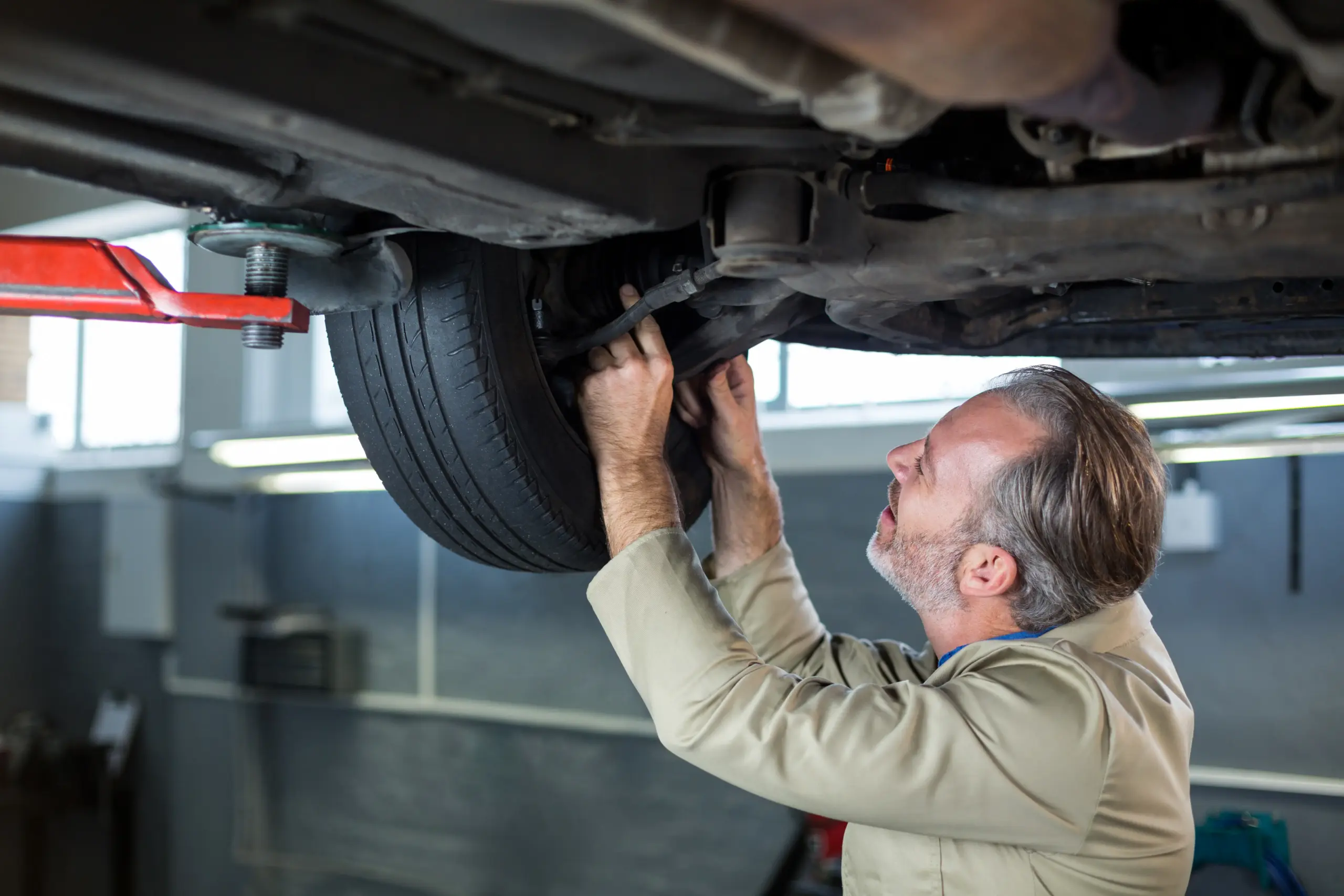
HiLuxes work for a living. Towing, hauling, gravel road work, and the occasional bush track all take their toll on the front-end suspension and steering components. The components most commonly worn out:
- Lower ball joints, typically need replacement by 150,000 km of heavy use
- Tie rod ends, 100,000 to 200,000 km depending on conditions
- CV boots, split CV boots are common; once torn, the CV joint itself usually fails within 20,000 km if not addressed
- Front wheel bearings, typically 150,000 to 250,000 km
- Drag link and idler arm (7th gen only), common at 200,000+ km
Used front-end components from low-km donor vehicles save 50 to 70% versus new and are typically excellent value for suspension parts.
The Numbers: Real Australian Cost Data
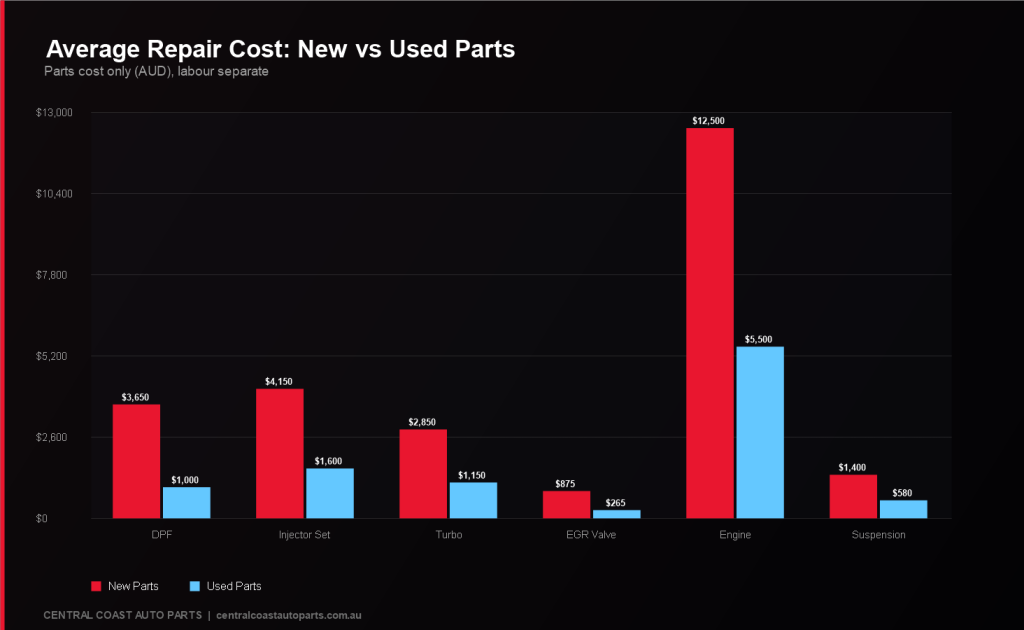
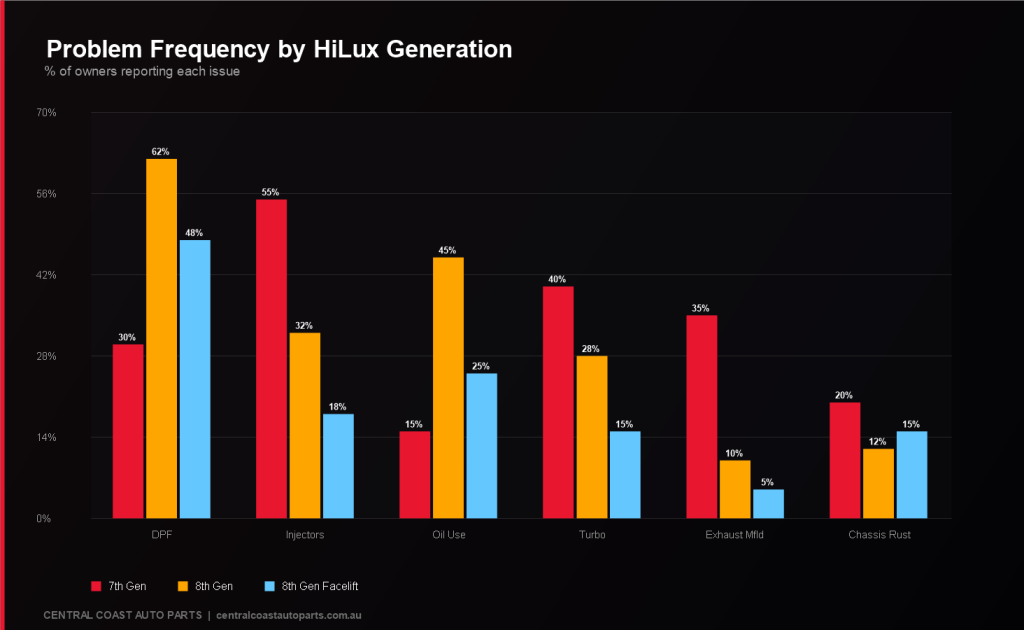
The following data is compiled from our workshop’s parts records and independent diesel specialist quotes across NSW. Use it as a real-world reference, not a fixed quote, every job is different.
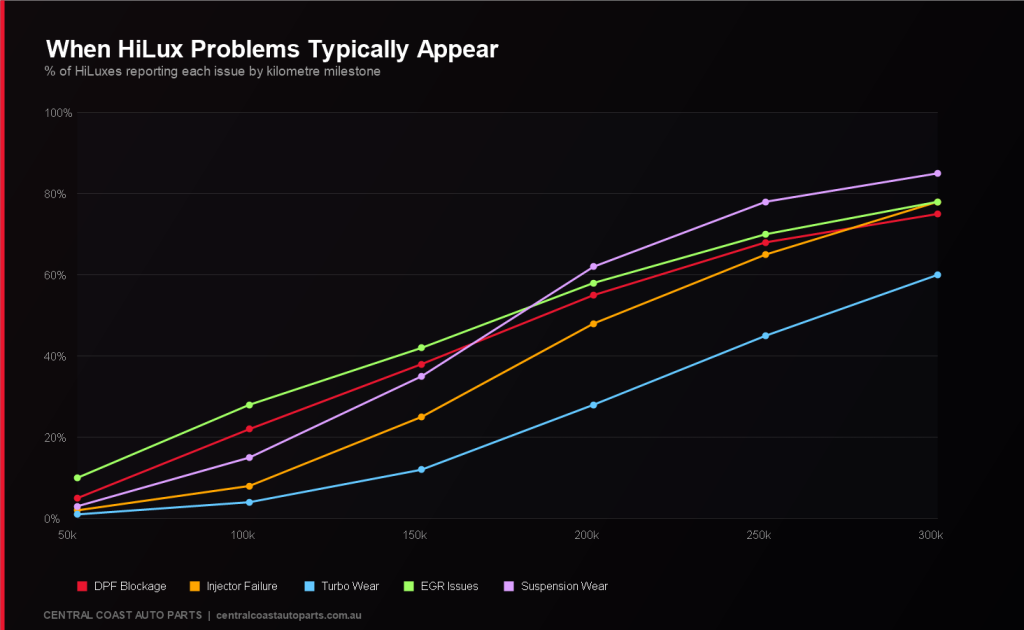
Graph 1: When Problems Typically Appear by Kilometres
Graph 2: Average Total Repair Cost — New vs Used Parts
Graph 3: Problem Frequency by HiLux Generation
Used vs New Parts: Where Each Wins
The honest answer is: it depends on the part. Treating “used vs new” as a binary choice costs people money. Here’s the practical breakdown we give every customer who walks in or calls.
✅ Used parts are almost always the smart choice for:
- Body panels, doors, bonnets, guards, bumpers, tailgates
- Headlights and tail lights
- Mirrors and trim
- Alternators, starters, AC compressors
- ECUs (with VIN matching)
- Transmissions and transfer cases from low-km donors
- Complete engines from verified low-km donor vehicles
- Suspension and steering components
- Interior trim and seats
⚠️ Used parts can work but require careful selection:
- Turbochargers (must be tested for shaft play and oil seal condition)
- Injectors (only if flow-bench tested by a diesel specialist)
- DPF (only if cleaned, tested and certified)
- Air conditioning evaporators (often have leaks that aren’t visible)
❌ Don’t bother with used:
- Brake pads and rotors
- Oil, fuel, and air filters
- Timing belts
- Spark plugs and glow plugs
- Drive belts and hoses
- Coolant and brake fluid
For more on this, see our companion guide: How to Inspect a Used Engine Before You Buy It.
The Maintenance Schedule Toyota Doesn’t Talk About
Toyota’s owner manual prescribes 15,000 km oil change intervals for diesel HiLuxes. Most independent diesel specialists in Australia consider that interval too long, particularly for vehicles driven mostly on short city trips. Our workshop’s recommended schedule for any HiLux you want to keep past 300,000 km:
| Service Item | Toyota’s Schedule | What We Recommend |
|---|---|---|
| Engine oil + filter | 15,000 km | 10,000 km (or 6 months) |
| Fuel filter (diesel) | 40,000 km | 30,000 km |
| Air filter | 40,000 km | 40,000 km (sooner if dusty) |
| DPF assisted regen check | Not scheduled | Every 20,000 km if city-driven |
| EGR clean | Not scheduled | Every 100,000 km |
| Coolant flush | 160,000 km then 80,000 km | 60,000 km |
| Transmission fluid (auto) | “Fill for life” | 80,000 km |
| Brake fluid | 40,000 km | 40,000 km |
| Diff oils | 40,000 km | 40,000 km |
💡 The Single Best Thing You Can Do for a Diesel HiLux
Take it for a 30-minute highway run at least every fortnight. This lets the DPF regenerate properly, burns off intake carbon, and lets the engine reach its designed operating temperature for long enough to drive moisture out of the oil. Short-trip-only HiLuxes are the ones that end up in our workshop early.
Buying a Used HiLux? Here’s What to Check Before You Hand Over Cash
If you’re shopping for a second-hand HiLux, these are the checks that separate a $4,000 bargain from a $14,000 nightmare:
- Pull the oil cap on a cold engine. Any milky residue under the cap = head gasket compromised. Walk away.
- Cold-start it. Listen for excessive injector knock, watch for blue or white exhaust smoke that doesn’t clear within 30 seconds. Both signal looming injector or piston ring trouble.
- Check the service history. Stamped logbook is fine; full digital service records are better. A HiLux with documented 10,000 km oil changes is worth significantly more than one serviced “occasionally.”
- Test drive includes a freeway run. Forced regen, turbo response, and any “limp mode” issues will show themselves under load.
- Inspect the chassis rails from underneath, particularly at the rear leaf spring mounts. Rust here is expensive to fix and a structural concern.
- Run the VIN through Toyota to check for any open service campaigns or oil-consumption recalls.
- Get a pre-purchase inspection by a diesel specialist, not a generic mechanic. The $250 to $400 you spend can save you tens of thousands.
Frequently Asked Questions
How long do Toyota HiLuxes typically last?
With disciplined maintenance, a HiLux diesel will routinely reach 350,000 to 500,000 km on its original engine. Plenty of examples on Australian roads have crossed 600,000+ km. The biggest predictor of longevity is oil change frequency and avoiding short-trip-only use patterns.
Is the 1KD-FTV (7th gen) or 1GD-FTV (8th gen) more reliable?
Both are excellent. The 1KD-FTV is mechanically simpler and easier to repair, but more prone to injector failure. The 1GD-FTV is more refined and slightly more efficient, but has known DPF and oil consumption issues. Neither is bulletproof, both reward proactive maintenance.
Can I delete the DPF on my HiLux?
DPF deletion is illegal for road use in every Australian state and territory. It will fail roadworthy inspection, void insurance in most cases, and result in EPA fines if detected. Legal alternatives: maintain it properly through regular highway runs, professional cleaning, or full replacement.
What’s the most economical way to fix a HiLux with a blown engine?
For most HiLux owners, sourcing a quality used engine from a licensed wrecker is significantly more economical than a full rebuild, and faster. A low-km tested used engine plus fitting typically runs $5,500 to $8,500, versus $9,000 to $14,000 for a comprehensive rebuild. Used engines from reputable suppliers come with warranty.
How much should I budget for HiLux maintenance per year?
For a well-maintained daily-driven HiLux past 100,000 km, expect to spend $1,200 to $2,000 per year on routine servicing, plus $1,000 to $2,500 averaged over time for wear-item replacements (brakes, tyres, suspension components). Trucks used for heavy towing or off-roading should budget significantly more.
Is a high-km HiLux worth buying?
Often yes. HiLuxes with full service history can be excellent value above 200,000 km. The risk is buying an unmaintained example with hidden problems, so always insist on a pre-purchase diesel-specialist inspection, full service records, and run the VIN for any open service campaigns.
Need Toyota HiLux Parts in NSW? Here’s How We Can Help.
Central Coast Auto Parts is a licensed dismantler based in Berkeley Vale, NSW, supplying tested, warranty-backed used parts for Toyota utes and other popular Australian vehicles. Every major component is tested before sale, and our team can VIN-match parts to your exact vehicle before dispatch.
HiLux parts we stock regularly:
- Engines, 1KD-FTV, 1GD-FTV, 2TR-FE, 1GR-FE V6 (low-km, tested, warranty)
- Gearboxes, manual and automatic, all common transmissions
- Turbochargers (shaft play tested)
- Body panels, doors, bonnets, tailgates, bumpers, guards
- Headlights, tail lights, mirrors, trim
- Suspension and steering, ball joints, tie rods, CV shafts, leaf springs
- Electrical, alternators, starters, ECUs, instrument clusters
- Interior, seats, dashboards, door cards
We also stock used parts for the other most-requested Australian Asian-make utes and SUVs, including Kia and Hyundai (Cerato, i30, Tucson, Sportage, Santa Fe, Sorento and many more).
📞 Call our parts desk on 02 4388 1818 with your VIN and what you need.
We’ll tell you exactly what’s in stock. Or submit a parts enquiry online and we’ll come back to you with availability and pricing within one business hour.
About the Authors
This guide was compiled by the workshop and parts team at Central Coast Auto Parts. We dismantle and supply parts for Toyota HiLuxes every week, and the data and pricing in this guide reflect what we see in our own workshop and across the NSW independent diesel mechanic community.
Related Reading: